A high-performance discovery pipeline reduced the candidate search space before expensive wet-lab work entered the chat.
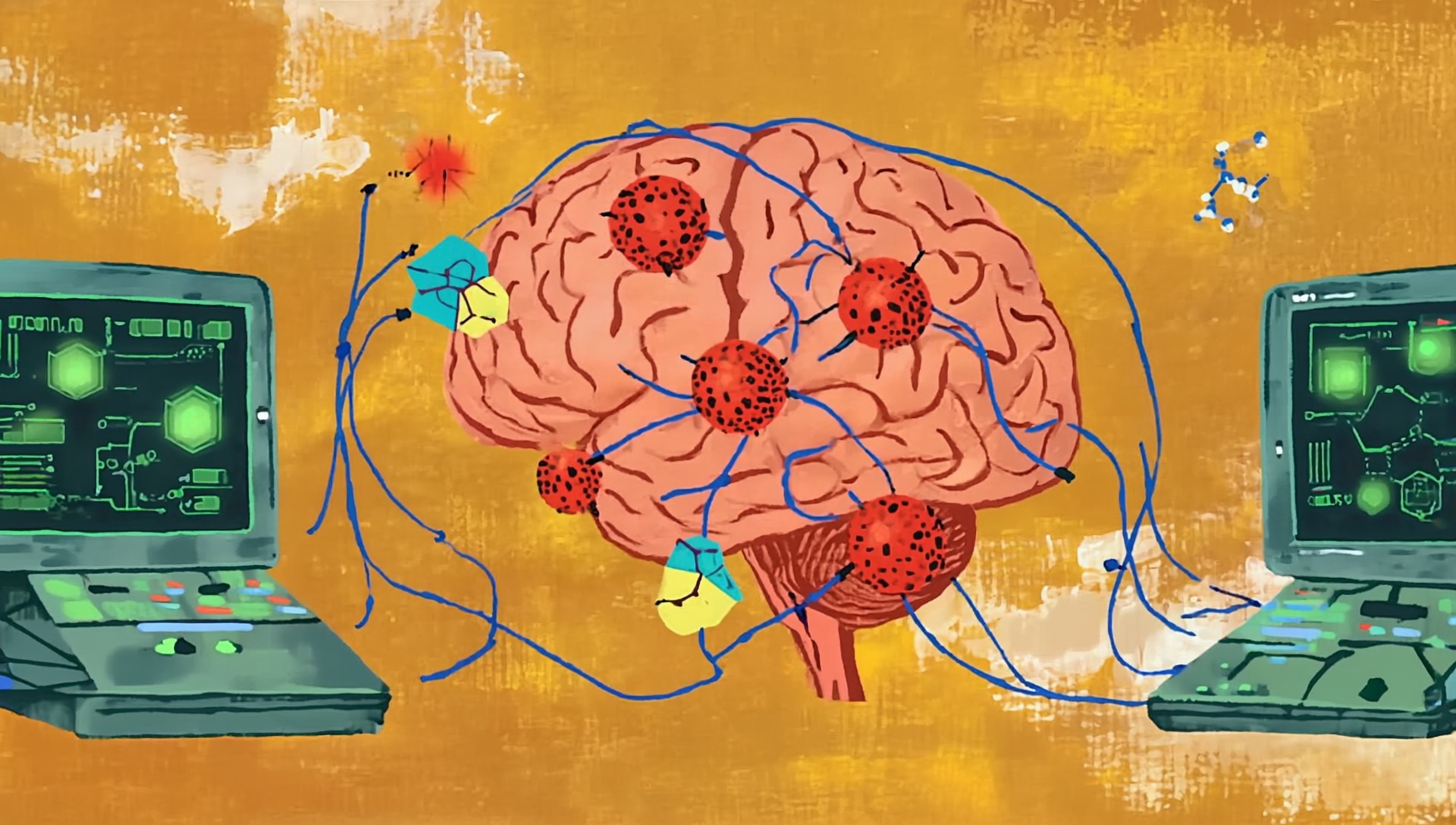
This project is the portfolio proof point for scientific AI under real computational pressure. Dreamers built a high-performance discovery pipeline that generated, screened, and prioritized drug candidates before they reached a lab bench, combining simulation, machine learning, fragment libraries, ligand-binding models, and synthesis-feasibility logic into one decision-support system.
The point was not to replace chemistry with a magic model. That is how you get expensive nonsense in a lab coat. The point was to reduce the search space, focus wet-lab effort on better candidates, and help researchers move from computational exploration to scientific decisions faster. In modern terms, this sits near AI for drug discovery pipelines, computational chemistry, protein-ligand modeling, synthetic route planning, and scientific data engineering.
The practical architecture had to combine several kinds of evidence. Fragment libraries created a wider candidate field. Molecular simulation and ligand-binding analysis helped rank candidates by physical plausibility. Stability, lipophilicity, and synthesis-feasibility filters kept the system from falling in love with molecules that looked clever but would waste lab time. That mix matters because drug discovery is not one prediction problem; it is a sequence of expensive ways to be wrong.
This work page is the portfolio proof point: it tells a buyer that Dreamers can build scientific AI under real computational pressure. The HTML case study carries the deeper narrative around screening, simulation, binding analysis, and synthesis planning. Keeping those pages different is intentional. One answers "have they done serious scientific AI?" and the other answers "how did the pipeline actually reduce the candidate search problem?"
- High Performance Computing (HPC)
- Molecular Dynamics Simulations
- Machine Learning
- AlphaFold
- Ligand Binding Models
- Chemical Synthesis ML Models
- Stochastic and Probabilistic Modeling
- Parallel Computing
- Python
- TensorFlow
- PyTorch
- Medicine
- Pharmacology
- Confidential Pharmaceutical Client
Challenge
The client needed a faster digital drug-discovery workflow for generating, screening, and optimizing candidates while reducing computational waste. The hard part was not merely building a model. Drug discovery combines physics, chemistry, biology, synthesis constraints, and a budget that will quietly punish every bad candidate that survives too long.
The platform needed to support ligand binding prediction, molecular stability analysis, synthesis feasibility, and high-volume candidate ranking without pretending AI had abolished experimental validation. It had not. It had made the search problem more tractable, which is already plenty.
Architecture
Dreamers built a high-performance computing pipeline around rational drug design. The system used fragment libraries to generate large candidate pools, screened compounds for lipophilicity and metabolic stability, ran large-scale parallel simulations for energy and RMSD minimization, and incorporated AlphaFold-style ideas into ligand-binding workflows.
The stack also included an ML-driven synthesis layer that suggested promising synthetic pathways from thousands of chemical heuristics. In practical terms, the system turned a sprawling search problem into a ranked decision pipeline that researchers could use to focus time, compute, and lab attention on better candidates.
Why It Was Hard
Drug discovery is not a leaderboard problem. A candidate can look promising for one property and fail somewhere else: solubility, metabolic stability, off-target behavior, synthesis cost, binding geometry, or plain old chemistry being rude. The useful system had to combine multiple filters rather than celebrate a single score.
That is why the current state of the art around biomolecular interaction prediction is relevant but not sufficient by itself. AlphaFold 3-style structure and interaction modeling can improve the toolset, while FDA activity around AI in drug development makes clear that responsible use still requires validation, documentation, and lifecycle thinking.
Result
The final platform enabled highly targeted receptor agonist generation for in silico assays, reducing dependence on costly in vitro and in vivo testing. The client gained a more efficient discovery process with better precision, lower cost, and a stronger computational foundation for scientific decision-making.
The work page now frames this as a portfolio proof point for scientific AI. This case-study page carries the deeper evidence: candidate generation, screening, simulation, binding analysis, and synthesis planning all had to work together or the pipeline would merely produce a longer list of compounds to be disappointed by.
"The problem of designing drugs is essentially the problem of approximating the solution to Schrodinger's equation for energy in 3D space. It's not a simple task, and they delivered a lot of value to our team of experts."